Welcome to the Delphic Oracle - please subscribe to receive new prophecies.

Facebook LinkedIn RSS Wordpress

Hephaestus Audio Transition

 Pavarotti

Well, it’s been nothing if not interesting.

In trying to more or less single-handedly start my own audio company, I have discovered something: I have absolutely no clue how to market and sell a product!  No doubt it is obvious to those with sales and marketing savvy that a designer might be ill-suited to this task.  Such being the case, I will transition Hephaestus Audio from a commercial site to a site devoted to those who love audio and audio electronics.  Really though, it’s been that all along…kind of like the Tin Woodman and his heart.

There will be some changes to the website soon.  I will change the product section to a project section that shares various projects I have worked on, such as the HMA-1000 monaural amplifier and the VK-1 dipole loudspeaker.  Also, I will keep chugging away with audio-related posts and articles at my relatively glacial pace.  I hope these are useful and enjoyable for my fellow audio enthusiasts.  You can still reach me via email (iris@hephaestusaudio.com) with any questions or just to chat about this great hobby.

We tend to be good at what we’re passionate about (or is it the other way around?) so I’m going to stick with what I’m good at: audio design.  Who knows, maybe someday down the road I’ll be fortunate enough to meet up with somebody who shares my vision, has a gift for sales and marketing, and is just crazy enough to love the audio industry.  Anything is possible.  :-)

Food for Thought

Leonardo da Vinci Sketches

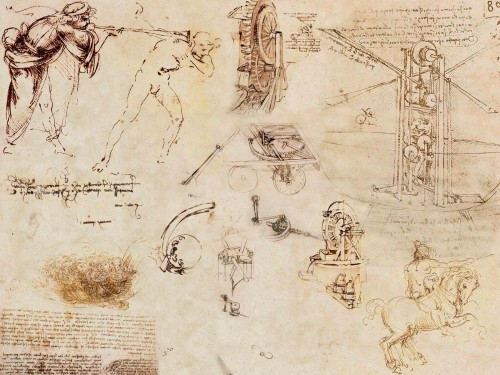
When I stop and think – imagine - the most fantastic images come to mind.  I know I’m getting the smallest sliver of a glimpse inside of my subconscious and my conscious mind is futilely attempting to make sense of it in the terms it understands: vision, hearing, etc.  This process is so amazing that I’ve never been able to convey it very well, although I’ve no doubt that other designers have a similar experience.  Most likely even more so.

That’s the first step.  Thinking.  Imagining.  However, for others to benefit from this process it is necessary next to do something.  A former professor of mine, Carl Pavarini, once said “Ideas are worth their weight in gold.”  After the class full of engineers enthusiastically agreed, Dr. Pavarini then posed the question “How much does an idea weigh?”  Ouch.  It’s a tough pill to swallow, but it’s painfully true.  You must do something - whether your medium is paint, words, code, or solder.

I’m not sure what’s more incredible: the fact that I have the great joy of experiencing these creative visions or the fact that so many others have as well!  The following quotes provide terse insight to the inner workings of great minds.  These are the thoughts of the giants on whose shoulders we have all stood.  The best innovators distinguish themselves by not fearing to stand at such a great height.


“I do not think there is any thrill that can go through the human heart like that felt by the inventor as he sees some creation of the brain unfolding to success… such emotions make a man forget food, sleep, friends, love, everything.” — Nikola Tesla

“But I think Steve’s [Jobs] main contribution besides just the pure leadership is his passion for excellence. He’s a perfectionist. Good enough isn’t good enough. And also his creative spirit. You know he really, really wants to do something great.” — Andy Hertzfeld

“People take the longest possible paths, digress to numerous dead ends, and make all kinds of mistakes. Then historians come along and write summaries of this messy, nonlinear process and make it appear like a simple, straight line.” — Dean Kamen

“An essential aspect of creativity is not being afraid to fail.” — Edwin Land

“One of the unfortunate things about our education system is that we do not teach students how to avail themselves of their subconscious capabilities.” — Bill Lear

“One always has to remember these days where the garbage pail is, because it’s so easy to make sounds, and to put sounds together into something that appears to be music, but it’s just as hard as it always was to make good music.” — Robert Moog

“With all the knowledge and skill acquired in thousands of flights in the last ten years, I would hardly think today of making my first flight on a strange machine in a twenty-seven mile wind, even if I knew that the machine had already been flown and was safe.” — Orville Wright

“Knowing is not understanding. There is a great difference between knowing and understanding: you can know a lot about something and not really understand it.” — Charles Kettering

“Opportunity is missed by most people because it is dressed in overalls and looks like work.” — Thomas Edison

“The real secret of success is enthusiasm.” — Walter Chrysler

Physics Friday – Calculus of Variations

Calculus of Variations

“I often say that when you can measure what you are speaking about, and express it in numbers, you know something about it; but when you cannot measure it, when you cannot express it in numbers, your knowledge is of a meagre and unsatisfactory kind; it may be the beginning of knowledge, but you have scarcely in your thoughts advanced to the state of Science, whatever the matter may be.” – Lord Kelvin

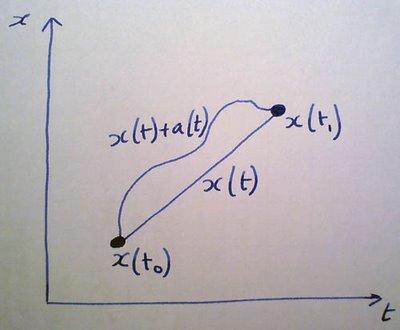
I do not completely agree with Lord Kelvin’s assertion, but there is no doubt that you must understand a subject really, really well in order to translate it into the language of mathematics.  Once you have done so however, a whole world of tools opens up.  Not only the vast array analytical tools of past generations, but the powerful simulation tools of the present.  The Calculus of Variations is one such tool – one that allows you to determine what is optimum, whether in terms of cost, time, quality, etc.

Please refer to this article for more background on the Calculus of Variations, as well as the derivation of the Euler-Lagrange Equation.

Noise Shaping in MASH Delta-Sigma Converters

Analog to Digital

Delta-sigma converters are important for digital-to-digital converters (DDC) and analog-to-digital converters (ADC), especially in audio applications.  Either an analog input or a high-resolution digital input is converted to a low-resolution digital signal via pulse-density modulation.

This article details a special structure for delta-sigma converters: multi-stage noise shaping (MASH).  This structure is free from the instability that plagues standard higher-order delta-sigma converters.  It is shown that the quantization error transfer function is identical for both structures.

Class-D PWM Harmonics

PWM Harmonics versus Duty Cycle

Features to note in this plot of the PWM harmonic content versus the duty cycle:

  • At idle (D=0.5) only odd harmonics are present, as expected from a square wave
  • Away from idle (D<0.5 or D>0.5) even harmonics added, as expected from PWM
  • Magnitudes are equal at duty cycle extremes, as expected from an impulse function


If the class-D amplifier is a hysteresis modulator with a passive 2nd order output filter:

Hysteresis Modulator with 2nd Order Output Filter

Features to note in this new plot of the PWM harmonic content versus the duty cycle:

  • The harmonics increase abruptly as clipping is approached, consistent with observation
  • At idle the output is dominated by the fundamental (i.e. a low level sine wave at f_{s})
  • Designs with more stable switching frequency at duty cycle extremes are easier to filter


Switching frequency versus duty cycle relationship for a hysteresis modulator:

f_{s}=4D\left ( 1-D \right )f_{0}

f_{s} is the switching frequency at D
f_{0} is the switching frequency at D=0.5
D is the duty cycle 0\leq D\leq 1

The Fountainhead

New York Skyline

“What is it that I like so much about the house you’re building for me, Howard?”

“A house can have integrity, just as a person,” said Roark, “and just as seldom.”

“In what way?”

“Well, look at it.  Every piece of it is there because the house needs it – and for no other reason.  You see it here from the inside.  The rooms in which you live made the shape.  The relation of masses was determined by the space within.  The ornament was determined by the method of construction, an emphasis on the principle that makes it stand.  You can see each stress, each support that meets it.  Your own eyes go through a structural process when you look at the house, you can follow each step, you see it rise, you know what made it and why it stands.  But you’ve seen buildings with columns that support nothing, with purposeless cornices, with pilasters, mouldings, false arches, false windows.  You’ve seen buildings that look as if they contained a single large hall, they have solid columns and single, solid windows six floors high.  But you enter and find six stories inside.  Or buildings that contain a single hall, but with the facade cut up into floor lines, band courses, tiers of windows.  Do you understand the difference?  Your house is made by its own needs.  Those others are made by the need to impress.  The determining motive of your house is in the house.  The determining motive of the other is in the audience.”


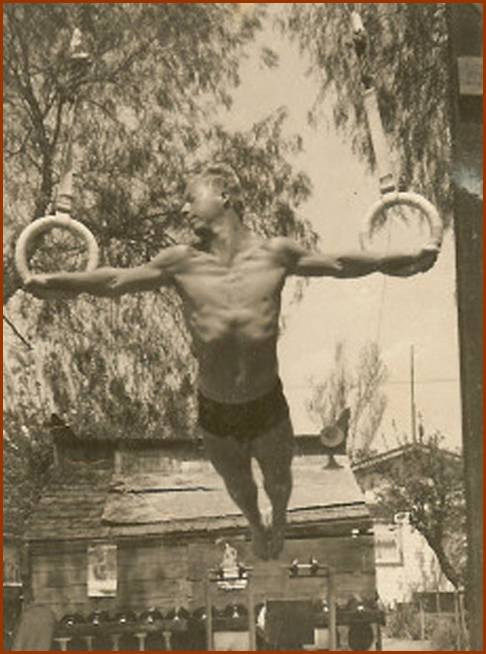
This is the way Howard Roark, the main character of Ayn Rand’s The Fountainhead, describes the house he has designed for friend and supporter Austen Heller.  This novel is rare in its accurate illustration of the way many creative types feel about design – whether architecture, art, or amplifiers.  Non-functional ornamentation can provide transient beauty, but lasting beauty comes only from functionality.  Some of the most beautiful designs in the world are beautiful for two simple reasons:

1) The design serves a purpose better than other designs
2) The embodiment of the design is a function of the purpose

The human body is the best example I am aware of.

Beer and Amplifiers

Beer

Anybody ever notice how “amplifier kits” sound the way that “beer kits” taste?

I recently took up homebrewing and, not knowing any better, I smiled as the nice LHBS man filled up my arms with “beer kit” paraphernalia.  I read the instructions carefully, bottled it up happily, and waited patiently for EIGHT weeks as it aged to “perfection”.  For any of you who have tried a beer kit, you are probably aware that “perfection” is a term to be applied loosely…

After dumping out bottle after bottle of icky beer, I was motivated to try making some beer from scratch.  This took lots of research that involves terms particular to beer making such as “degrees Plato”, “brix”, “original gravity”, “final gravity”, “wort” (pronounced “wert”), etc.  Make no mistake that I still made plenty of errors as I learned the ropes of making beer from scratch, but with a little tenacity I finally made something pretty good.  Please see the recipe below.

This whole experience bears an uncanny resemblance to “amplifier kits”.  This is where you take somebody’s amplifier controller and simply add the right ingredients – output stage, output filter, and power supply are typical - to build a complete amplifier.  It all sounds so simple, like the beer kit, and great results are promised, but these amplifier kits never quite manage to live up to it…

After throwing out the amplifier kit (i.e. “dumping the bad beer”) some are motivated to do research to figure out what is needed to make an amplifier from scratch.  There are many terms particular to amplifier design such as “dead time”, “slew rate”, “THD”, “EMI”, etc.  There are plenty of errors still in store for the would-be amplifier designer, but again with some tenacity it is possible to develop an amplifier that will shame any amplifier kit out there.

“Dry Ice Ale” Recipe

  • 6 lbs Briess 2-row malted barley
  • 2 oz Glacier hop pellets (added during boil)
  • 2 oz Cascade hop pellets (added to secondary)
  • 11g Nottingham ale yeast, proofed
  • Bring 5 gal water to 160F (fill pot with water night before)
  • Add grain and steep 30 min stirring occasionally
  • Remove grain and bring to boil (this is a no-sparge process)
  • Boil 30 min while adding 2 oz Glacier hops continuously
  • Put in ice water bath and stir gently for 20 min
  • Pitch proofed yeast and pour into primary
  • Fill airlock with water and let ferment 1 week
  • Transfer to secondary, add 2 oz Cascade hops
  • Fill airlock with water and let sit 2 weeks
  • Transfer to bottling bucket and add 1/3 cup sugar
  • Fill bottles and let carbonate 1 week
  • Put in cellar and let rest 4 weeks
  • Serve at cellar temperature and enjoy!

Gratuitous Self Promotion

The world’s first review of the HMA-1000 received the elusive Maximum Mojo Award! 

maximum-mojo-award

Reviewer Bill Schuchard who calls the amps ”The Hephas”:

“The Hephas sound effortless, powerful, and transparent. There is a sense of ease and subtle detail.  The details don’t jump out at you yet you just hear more of what’s going on.  I was consistently hearing things I had never noticed and popping in headphones to verify. The highs are delicate and airy with a huge sense of space. The soundstage is taller and wider and surprisingly deeper than I am used to. Music in the foreground was not only a little closer than I expected but simultaneously the music in the background seemed further away than usual. Typically, I have found amplifiers to sound either forward or recessed but having both shows the delicate balance it struck. I attribute this to the amplifier’s ability to delineate the subtle lower level detail that sets up the space. String instruments not only had an added sense of air about them but some midrange bloom. Getting midrange bloom from a class D amplifier just goes to show that they are not all the same. One main striking aspect of the Hephas is its ability to attack transients. It is lightning fast and makes listening to energetic and uncompressed music so much more enjoyable. Lastly, the bass is interesting in that it’s a tad less controlled than the Bryston 2B SST and slightly richer; almost tube like. When pushed loudly, the bass stayed powerful and controlled all the way up until my woofers started to bottom. At the risk of shredding my GR Research M165X woofers, I had to be a little judicious with the volume knob.”

This is a great parting note from Mr. Schuchard in the review:

“Money speaks larger than words. I purchased the amps and couldn’t be happier with them. If you can’t stomach the price, take a listen and think again. If you can’t afford them, listening is just a tease. The 7 year parts and workmanship warranty and 90 full day ‘no questions asked’ return policy make it easy for one to take the chance on them.”

Bill Schuchard and James Darby of Stereomojo have been wonderful to work with and I couldn’t ask for more from an audiophile publisher.  To say I am surprised and thrilled at receiving the Maximum Mojo Award is an understatement.  As I put it in my first tweet regarding this topic, “Is this how musicians feel after a spectacular performance?”

Barrie Gilbert

“We aren’t making the best products just because some customer suggested them to us, or even assured us of big orders, but because we have a passion to bring some art, in which we have a large personal investment, to the pinnacle of perfection.” – Barrie Gilbert 

barrie-gilbert

This quote comes from Ch. 18, ”It Starts with Tomorrow”, of The Art and Science of Analog Circuit Design.  If you love analog circuits, then this book should be placed right next to your copy of The Art of Electronics, if it isn’t there already.  Please refer to this IEEE article, “The Gears of Genius“, for more on this amazing designer.

There is a section of this chapter that deserves a brief summary – a bit of pseudohistory entitled ”History through Dark Glasses”:


“…the first step to a successful product is thorough market research,” reads a young Thomas Edison in his new copy of “Yours is the Market: How to Find Out What People Really Need and Thereby Become Rich and Famous” by Harvard professor Yucan Sellum.  It is essential, says professor Sellum, to listen to the “Voice of the Customer” (VOC).  Young Mr. Edison now goes door-to-door to conduct the needed market research asking if his potential customers see any possible improvements in the way they light their homes.

Door 99

“First, if you can invent a stronger, brighter gas mantle, people will beat a path to your door.  Those durned things are always breaking!  And second, if you can invent a way that causes leaking gas pipes to be self-healing, you’ll quickly find yourself off these streets.”

Door 100

“Now, if you find a way to make our oil-lamps burn twice as bright and and twice as long from one filling, that would be something you could sell.”

Edison returns to his lab, dejected.  He has adhered to professor Sellum’s advice that he must conduct his marketing research “in such a way that…one only elicits those facts which the customer freely wishes to impart to the researcher.”  “Too bad nobody ever asked me if I had any ideas of my own,” sighs Edison as he gazes at his new tungsten lamp powered by a generator spinning in the basement…he then writes:

“Trip Report, 18th November, 1878.  Spent all day doing a VOC in Menlo.  Spoke with 100 people re lighting improvements; got good info. from 83….Action Item: Write Product Development Proposal re Improvements to Gas Mantles and Oil-Lamp Wicks.  Do before Monday exec. council mtng.  Call KJ to consider weaknesses in present methods of mnfng mantles.”


After your masterpiece is created you must listen carefully to your customers and adapt quickly.  However, for that first critical, tenuous, and beautiful spark, you must listen only to the inner dynamo that drives you to create that which has never before existed.

Essays and Amplifiers

Remember writing essays in school?  Unless you are of a very different sort than I, this consisted of adding useless filler words, excessive punctuation, generous font sizes, and plenty of spacing and indentation – all in an effort to reach the required minimum length.  The end result was judged by many parameters - including reaching the minimum length and conciseness.  These two goals seem mutually exclusive to me.  If the desired end result is a 1½ page essay, perhaps the english instructor could lead the class through this exercise that starts with a 3 page essay:
 

  • Write a 3 page essay on high-end audio
  • Round 1: eliminate 25% of word count and reread
  • Round 2: eliminate 25% of new word count and reread
  • Round 3: eliminate 25% of new word count and reread
  • Submit essay with original word count reduced by 50% 

quill-and-parchment

Maybe some instructors do this and if so, congrats!  These lucky students will go on to write emails, papers, blogs, maybe even books, that will require far less of the readers valuable time for the same quantity of information and entertainment.  This is a great approach for writing, but why stop there?  It can even be applied to electronics design!  For example, the electronics instructor could lead the class through this exercise to reduce the number of components used in a design by 25%:
 

  • Design a 100W switching audio amplifier
  • Round 1: eliminate 10% of component count and retest
  • Round 2: eliminate 10% of new component count and retest
  • Round 3: eliminate 10% of new component count and retest
  • Submit design with original component count reduced by 25%

 bob-pease-breadboard

Of course this technique should not be limited to a classroom setting.  We can and should do this all the time.  With the written language it leads to concise, informative and enjoyable documents.  With audio electronics it leads to simple, elegant and enjoyable designs!