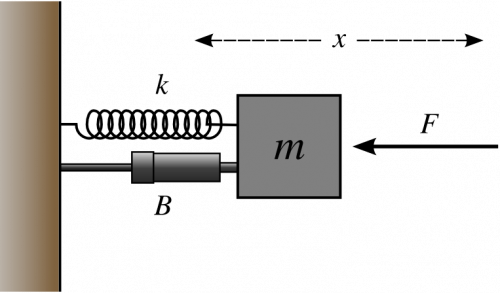
An amplifier’s damping factor is a rating that gives a feel for the amplifiers control over a load. It is essentially a measure of the output impedance of the amplifier – a value that would be zero for an ideal amplifier (i.e. the ideal amplifier would be load-independent).
Like many measurements of an amplifier’s performance, this one is the victim of misinterpretation and measurement trickery:
First, the exact measurement point has a huge impact on the resulting value. For example, taking a measurement right at the feedback points of the amplifier tends to give a high damping factor, as this is the actual point the amplifier is attempting to regulate. Unfortunately, this is rarely where the user connects the load! The user generally uses the externally accessible speaker connector, so this is the chain that results: the wires/traces from feedback nodes, the contact resistance of the speaker connector, and the external cables that connect to the load. When this more realistic chain is considered, much more modest damping factors result, however they are much more representative and useful for the user.
Second, the bottom line is that if the amplifier’s effective output impedance is much lower than the minimum impedance of the loudspeaker being driven, there is little to be gained from further increasing the damping factor. In fact, it may very well be detrimental, given that the typical means of increasing the damping factor is by increasing feedback. If the feedback is increased excessively it may impact stability and result in lower-amplitude, but more objectionable, harmonics – this will be the topic of a future entry.