The audio industry is a small one, but luckily there are much larger industries that can be drawn upon both for inspiration and for the components particular to that industry. For example, many of the MOSFETs and IGBTs available have been driven by the automotive and telecom industries, but they are also well-suited to audio.
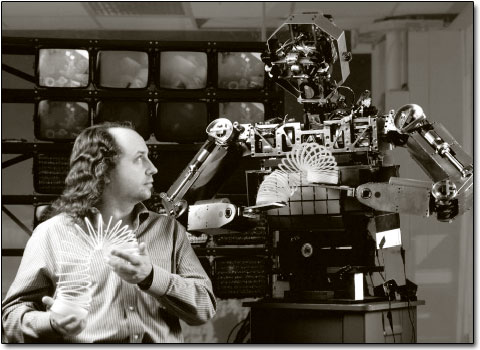
Robotics is a good example of a field that can be used for inspiration. For example, one particularly useful and powerful conecpt is that of “subsumption architecture” developed by Rodney Brooks. This approach builds a robot up in functional layers: the innermost dealing primarily with functions such as movement and safety, and the outermost dealing primarily with high-level functions, such as path-planning or communication, that are sometimes able to override the lower-level functions. As applied to audio amplifiers, this concept leads one to build a robust amplifier core that can drive the required load, protect against a short, etc. and then to augment it with layers of higher-level functionality and protection.
One of the earliest lessons I learned in amplifier design was the very fine line between reliability and usability. If an amplifier is designed to protect aggressively against any possible deviation from the norm, then it is likely a user will trigger a protective measure during legitimate use. Conversely, if the amplifier is designed solely with the idea that “the show must go on”, then it is likely the user will at some point do something the amplifier really should protect against. If subsumption architecture is applied, then it allows for the best of both worlds: an amplifier that can protect itself from legitimate abuse via the inner layers, and an amplifier that allows the show to go on via the intelligence located in the outer layers.